Sunday, February 14, 2016

Prepare, Show-Up, and Engage

The Catechism of the Catholic Church refers to the Eucharist as the source and summit (1324). As such, the Eucharist is of utmost importance for us as Catholics and it is natural to feel a sense of respect and appreciation for the priests who make the Mass possible. While I have participated in Mass throughout my life in different ways, I don't think it was until recently that I realized my role in impacting the way that I experience Mass as strongly as I do now. Over time there has been a desire to support the liturgy in different ways and to better understand the deeper meaning of the Mass, but different Catholic resources have come together to emphasize my role.

When thinking about how Catholics can be more proactive in impacting our Mass experience, here are some starting points that come to mind: prepare, show up, and engage.
prepare: Over the last couple of years especially, I have been blessed with many resources and encouragement coming into my life that have positively impacted my growth as a Catholic and deepening my understanding of the faith. I have come to realize that anytime we invest in our own faith development, we are also investing in the Catholic community.  
Alongside prioritizing faith formation in general, many resources have pointed toward preparing for Mass. Redeemed Online and Matthew Kelly from Dynamic Catholic instantly come to mind when thinking about encouragement to read the Sunday readings at some point in the week prior to Mass. Then, we attend Mass already thinking about and processing the readings. As a result, we are better prepared to let the homily have an impact or to have an opportunity to watch for clarification of points from the readings that brought confusion. 
show up: Regular Mass attendance with preparation helps to bring all the pieces together. In my adult life I had previously read the daily readings, but up until I started last spring, I had never been able to consistently attend daily Mass. However, I have noticed a marked difference of daily attendance coupled with daily readings and reflections at home alongside resources to invest in my faith formation. 
By attending regularly I have a better understanding of how the readings come together, as well as familiarizing myself with the rhythms and routines of the priests' homilies, allowing me to better capture their ideas.
As Catholics, we can show up in different ways at different points in our lives, and it is important to re-evaluate as shifts occur in our lives so that opportunities don't pass us by. When I was teaching in a K-12 context, my schedule would not allow for daily Mass attendance. When I switched to being a university professor, I still felt just as busy with my career. Since the work load felt similar, I didn't pause to think about whether the differences in my physical schedules between the two contexts would have implications for my spiritual life. It took me almost 2 academic years to realize daily Mass attendance was possible now based on the greater level of flexibility in my current context. As a result, this last year I have realized the importance of considering what is really possible in my life at any given point in time, rather than being so caught up in my career demands that I make assumptions about what is or isn't possible without considering the reality of the scenario. 
engage: After preparing and showing up, our mindset and active participation while at Mass is critically important. I love resources such as Altaration and Behold the Mystery to have a better understanding of the power of different parts of the Mass. If points of confusion were not clarified within the Mass, priests are available and accessible as resources if we are willing to engage in conversation. There are also a range of Internet based resources or knowledge of other parishioners to help us grow along the way. 
When thinking about what I can do to invest in my Catholic faith, I know that preparing, showing up, and engaging will continue to be core. Regardless of the priest in front of me with shifts and changes over time, I have confidence that they will be preparing, showing up and engaging. Part of valuing my priest is coming back to these three points to consider what I am doing to reciprocate those actions in order to actively contribute to my Mass experience, rather than a perspective that the priest has the sole responsibility.

What role do preparing, showing up, and engaging play in your life as a Catholic today? What are your current strengths? How might you re-evaluate in order to grow and nurture your faith? 

Tuesday, December 22, 2015

Go in Peace - Book Reflection

I previously mentioned that in the last year I have come to value the Sacrament of Confession more than any other point in my life. However, I have found it is sometimes hard to know how to have effective confessions when I go more regularly (trying to go once a month). As a result, I have had more of an interest in different versions of examinations of conscience, as well as resources focusing on the Sacrament.

That desire to know more is what led me to read Go in Peace: Your Guide to the Purpose and Power of Confession: 101 Questions and Answers by Fr. Mitch Pacwa, S.J. and Sean Brown by Ascension Press. As the title implies, the majority of the book is in question and answer format related to different aspects of Confession. However, at the end of the book, there is also a section on preparing for the Sacrament, an Examination of Conscience, the process of the Sacrament, a glossary of terms, and indulgenced prayers.

The Q&A section examined multiple layers of Confession, such as the an explanation of the Sacrament, the purpose of the Sacrament, the historical background of the Sacrament, Biblical links, the role in (or lack of) in other religions, an exploration of sin, and purgatory. The questions are listed 1-101 without necessarily being broken down into any sub-categories or having transitions between topics; although, the flow does feel logical and there are often connections back to previous discussions in order to have a more cohesive feel.

A few examples of some of the aspects that I appreciated most are:

  • In question 34, there was an explanation of the Code of Canon Law (1457) calling for at least an annual confession followed by a rationale for more regular confessions. The authors stated, "Automobile engines run smoother if they have regular tune-ups by a mechanic, and teeth stay healthier if they are cleaned regularly by a dentist. So, too, the spiritual life of the soul benefits from frequent confession" (p. 32). 
  • When thinking about the status quo in our present day society and the recognition that there is a difference between what is acceptable in the overall general culture vs. what the church teaches, I especially loved the ideas in question 62. It talked about secular influences and the sense that sometimes we might feel like because something is so prevalent, it must not really be that bad. Fr. Pacwa shared a typical reply to those who express the sentiment of basing self-reflection off of cultural norms by stating, "You seem to be a good person, so long as you are comparing yourself to Al Capone. Once the norm for behavior is Jesus Christ, the evaluation may change" (p. 51). While my initial response was to laugh, I appreciated the reminder of what really matters and what should guide us when we are examining our conscience. Before I talked about the power of a priest as a guide because of the strong Catholic lens, rather than a lens based on current larger cultural norms. Fr. Pacwa's words here made me think back to that again, which is another reason for me to value Confession, knowing the priest will be in persona Christi and that the guidance will be in sound alignment with the Church He established for us. 
  • As a parent, I appreciated question 77 that focused on recommended frequency for children, as well as a rationale. Going on a regular basis "develops in them a good habit of examining their consciences, accepting responsibility for their misdeeds, and doing penance for their sins" (p. 62). I had not necessarily thought about the value in those terms, so that will help me as a parent to try to assist my girls in understanding why the Sacrament is relevant to their lives and how it can help them be better people. It is also a good reminder for me as an adult. One area where I realized I can improve is that I have noticed that as I confess I often qualify my sins or try to pair it with something positive about myself, rather than just going in and taking full ownership without trying to soften it or balance it out with positives. The excerpt that I shared from this question helps me to focus on a goal of taking ownership for my sins more fully.
Because Confession can be hard - voicing our short-comings and being vulnerable - this book is a good resource to establish why it is necessary and how it is beneficial for us. The main title Go in Peace emphasizes this.

Friday, December 18, 2015

Transitioning into Vacation Mode - Setting Priorities


For the first time ever, last fall shortly after I had a breakthrough in November with setting strong career boundaries, I realized that in December I could not fall into the same trap once again of having career to-dos take over the bulk of my Christmas break. Instead, I wanted to approach it differently with the recognition that there's always more to do and I will always be able to fill my days with work to-dos. In the meantime, I would be missing out on valuable family time, as well as feeling drained at the end of the break.

Instead, I decided on a compromise. I thought about how my older girls had school for one week beyond my fall term, so I decided that I would still send my youngest to day care and work that week (the first week of my break) in order to then prioritize really taking off the 2 weeks they were off. I can't remember if I was able to firmly stick to my intention last year or not, but I do know that I was able to hit the pause button more than I had any other year since I became a teacher in the 2005-06 academic year. It made all the difference.

This year I decided to do the same. As long as my kids are at home, I want to prioritize pausing work while they are on break. At the end of last week I made a list of what I would like to accomplish during the week in order to set myself up for taking a break without too much worry about pending to-dos. I also built in a day for me to catch my breath in a quiet house, mainly spending some time scrapbooking - something that has been mostly neglected this year. 

As the week went on, I realized the list was perhaps a little too ambitious. With my two priorities in mind - to have at least one day for me and to not work the next two weeks, I decided on another trade-off. Rather than going home early last night, I worked late. I re-considered my list in order to do what I thought was most important to be able to walk back through the door on the first day of winter term without feeling too frenzied. I got a start on some of the other to-dos. Then, I walked out the door with a sense of peace. Aside from needing to click publish on a couple of items for my online graduate classes the Thursday before the term starts, I will be on break. 

This morning I took the browser I use for my work email off my dashboard so that I have to go that extra step in order to check my email. Enough to give me pause and think - do you really need to check that? The vacation automated response is there and I want to try to let it do its job, sending the message that I am on break and will respond when I go back. 

What can you do during this holiday season in order to prioritize what is most important even though there are other aspects that might feel important but can really wait? How can you hit the pause button on something that might feel like it has to happen but really doesn't in order to have a more peaceful season?

Sunday, December 6, 2015

Coming Soon to my Mailbox

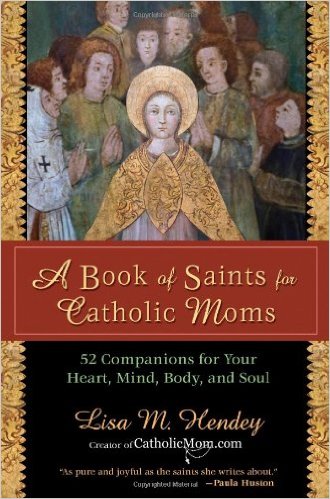
I recently ordered some new books to read throughout the next months. Here's a glimpse into what I am excited to receive:


Pre-Ordered:

Saturday, December 5, 2015

Thoughts on Teresa Tomeo's Extreme Makeover

In the summer of 2014, one of my former colleagues sent a Facebook message to me and some other women, "Just finished reading this book and wanted to recommend it to all. It is worth your time, I will be buying it to use as a reference" with a photo of a library copy of Teresa Tomeo's Extreme Makeover: Women Transformed by Christ Not Conformed to the Culture.

This past year I read the book twice - once on my Kindle and then again in paper version because I wanted to be able to flip back and forth from different sections easier, as well as be able to share it with others.

One of the aspects that I loved most about this book is that I had a better understanding of the rationale for some of the Catholic teaching when it comes to topics that often come up in culture and the media, such as the Catholic Church stance on birth control, abortion, and the role of women in the Church. Though I had an understanding of each before, the book was able to provide a deeper background, which in turn helps to strengthen my convictions and feel a stronger sense of confidence in the teachings when it comes to the well-being of humans. When talking about women's ordination, Tomeo stated, "Although the matter is considered settled, that doesn't mean we should walk away from a deeper understanding of this teaching. If you're still struggling with this issue, reading and prayerfully reflecting on the above documents and Scripture and consulting a good spiritual advisor or director should help you come to peace with the matter" (p. 123). This is a takeaway for me for any Church teaching - make sure that I am well-informed from solid Catholic resources in order to have a sense of peace through understanding.

Another concept that struck me in the book was the recognition that many Catholic adults have not been properly Catechized. As I have been learning more about my Catholic faith, I have been frequently experiencing a sense of surprise that I did not know or did not understand certain concepts or ideas that help click pieces into place to make the bigger picture make a whole lot more sense. Earlier this year I also saw glimpses of Tomeo in the Symbolon series, another key influence on my faith development.

I appreciated that Teresa started the book by sharing her journey. Though our experiences were very different, I learned so much by reading about her growth and reflections and there were implications about goals for my own faith development. I respected her courage, trust, and personal development over time. This reminded me of the power of story and how we can positively impact others if we only have the courage to share our voices and stories.

Extreme Makeover was one of the resources this year that has encouraged me to view evangelization as part of my role and then inspired me to view ways in which I was already evangelizing without thinking about it and then to also start taking steps out of my comfort zone.

Based on Teresa's inner view of the media, it was interesting to learn from her experiences about the perceptions that are and are not valued in popular media, as well as tensions for those who are living in counter-cultural ways with strong convictions aligned to the Christ's teachings. Tomeo quoted Catherine of Siena saying, "When we are whom we are called to be, we will set the world ablaze" (p. 134). I am grateful for resources such as this who help me to reflect on who I am called to be by strengthening my personal faith development and convictions.

Saturday, November 28, 2015

In the Mix: Approaching the End of the Term

I haven't been posting on my blog as much as I would like to, swept up in a swirl of everyday life. I always love Thanksgiving break during fall term, knowing that we have a little time and space to breathe before shifting into the last week of the term and finals week, followed by a 3 week break before the start of winter term.

One of the things I look forward to during the break is a chance to step back and consider how the term went. I know that I was able to continue with certain aspects of my life that I wanted to (starting the day with daily readings, attending daily Mass unless I had a meeting that couldn't be avoided, weekly Adoration), but other aspects slipped (occasional instead of daily Rosary, not as regular with reading Catholic books, little to no journaling).

I need to reconsider the rhythms and routines of my life during academic terms and think about implications for my vision for the transition to winter term. I also need to be proactive in envisioning how my life will shift once again in the spring of 2015 when we welcome baby #4 into our family. Two days after I published this post where I was finally getting a greater sense of peace and a better ability to let go and trust, I realized that I was pregnant! Once again, I was amazed at God's plan for my life. The delayed answer. His time table. The lesson I needed to learn, the way I needed to grow before getting my answer.

Here I am in the mix of my mid-30s thinking, reflecting, and living. Thy will be done! Help me to live my life according to Your will and to navigate the different options and possibilities. Where there is a clear-cut choice, let me choose You.

Tuesday, October 20, 2015

Recognizing the Value of Confession

I have never valued the Sacrament of Reconciliation as a regular part of my life until about a year ago. Before then, I went sporadically as a youth and in college and rarely remember going as an adult. In the last three years, two of my girls received their Sacraments of First Reconciliation and First Communion. As part of the parent-child meetings, parents were encouraged to also go to Reconciliation. With my second daughter this year the DRE mentioned that our priest recommended monthly Confession. 

This in combination with Matthew Kelly's Confession chapter in Rediscover Catholicism encouraged me to reconsider the role of Reconciliation in my life. The chapter is one from the book that I have read multiple times and will continue to revisit. The words spoke to me, such as, "In my own personal journey, Confession has played a very powerful role, helping me to strive to become the best-version-of-myself. I find Confession to be a humbling experience, but not a humiliating one. Above all, I find that it is an experience of liberation that enables me to reassess where I am in the journey, helps me to identify what is holding me back, and encourages me to continue along the way" (p. 150). He then went on to discuss how "this sacrament has been abandoned in our own time" (p. 151), which I could relate to since my own experiences in different phases in my life had never pointed toward a strong appreciation for the Sacrament evidenced by regular Confession. The rest of the chapter was compelling for me because of his personal testimony of the power of the Sacrament and why he recommends that people seriously consider it, making me rethink what I knew of the Sacrament. 

With his words and the recommendation of our priest in mind, I decided to try to integrate the Sacrament more regularly into my life. Initially, what I found along the way was the first experience that I remember feeling the sense of a priest acting in persona Christi at Confession. I had the same priest on different occasions and as I would reflect back on what he told me, it always seemed to be perfect - exactly what I needed to hear at the moment even though I didn't realize in advance it was what I needed. Yet, there was not always a clear link between the most compelling aspects of his words and what I had confessed. Instead, I would receive targeted feedback based on what I said, and then there were more global, big picture what I really needed right then mixed in. The priest also had a calming presence in general, so he was very comforting. As a result, the Sacrament I typically connected with being nervous or discomfort turned into peace and a recognition of the power of the Sacrament. 

Since then that priest transferred to another parish, but I will remember his smile and his role in connecting me to the Sacrament. In the months since his departure, I continued to go to Reconciliation - often every two months or a month and  a half, rather than monthly. Right now in my Reconciliation journey, I am trying to learn to have good Confessions while going more regularly, including not wanting to sound like a broken record with some of the areas where I struggle in my day to day life as a wife, mom, and educator, as well as trying to be more cognizant of areas I should confess. Maybe it's time to re-read the Confession chapter to see how Kelly's words will speak to me where I am at right now as opposed to the me in early months needing the encouragement to take that first step and go to Confession regularly.