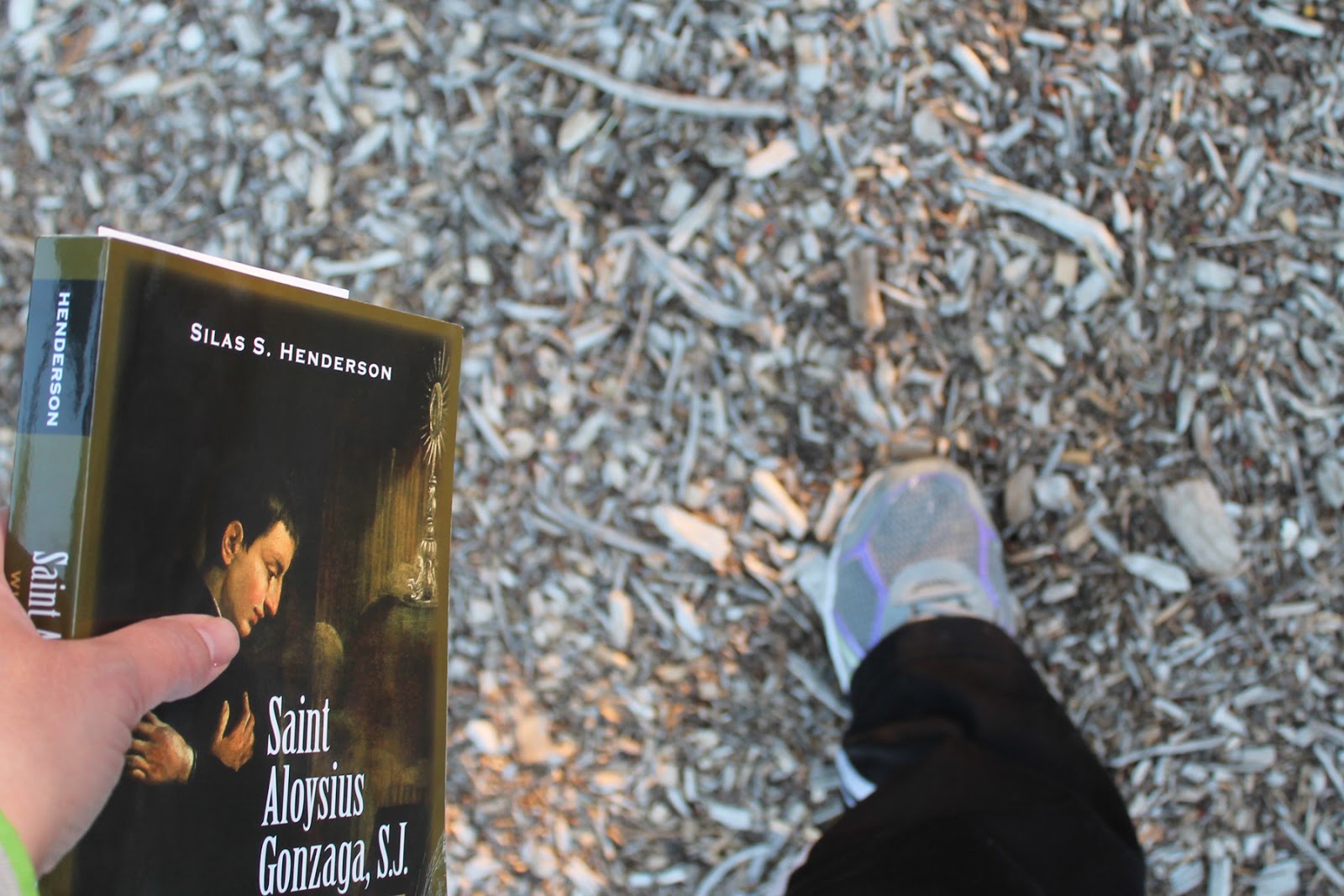
The arrival of the mail was always a highlight of the day around my house growing up. The anticipation of wondering whether or not something had arrived for us often prompted races between my sister and I to see who could get to the mailbox first. As soon as one of us caught sight of the delivery car pulling up alongside our fence, we dropped what we were doing and started running. Often one would go out the back door, while the other went out the front door. Towards the end of my high school career email came about, and with it the possibility of on-going arrivals throughout the day and night.
It comes as no surprise to me that when considering gluttony, one related area of growth for me has been frequency of checking email. Recognizing a tendency for it to be easy to be overly preoccupied with connecting via technology has influenced me to opt out of having a smart phone with email access and social media. Even without that access, at different points in recent years, I have noticed that having my email open or checking back all too often - just in case - is a distraction that is an obstacle to efficiently focusing on other projects or being present to others.
I have experimented with limitations over different periods of time, but this fall I set an intention that is the most restrictive yet - a goal of once/day Monday-Friday from mid-August to the end of Ordinary Time. Applying the concept to both work and personal email, as I formalized my intention, I wondered if it was a reasonable restriction or not. What if my students had a time sensitive question on an assignment that was due? Would I receive emails where there is an expectation for immediate attention that I wouldn't see in time? Yet, I also recognized that a big part of it is just the layer of habit. I also realized that likely the "world wouldn't end" if I only checked once/day and decided to move forward and approach it with an inquiry stance.
While there have been multiple days where I have not met that intention, my checking has definitely decreased as a result, and I have reflected on how to more faithfully align over time. For example, I make notes of emails I need to send or tasks that I need to consult email in order to complete when they come to mind throughout the day and am now focusing on actually remembering to consult that list when I have my email open for the day. When I feel the urge to justify why I should open my email back up for a specific task, I am getting better at asking myself whether there is really a valid reason why it cannot wait until the next day and how I can limit myself to completing that task and getting back out.
When I was crafting my intentions for this phase of the liturgical year, my spiritual director let me know they would help me have a more clear picture of how I am making myself available to God and to others. Voluntarily limiting email access throughout the day has been helping me to focus on different projects. That efficiency is supporting me in being able to protect the time that I have set aside for family.
Detaching from the urge to be connected to email throughout the day has helped me to put the level of need in perspective. As the timeframe of my intentions phases out, I intend to I maintain a strong resolve to be intentional and careful with the role of email in my personal and professional life.
Showing posts with label Living at the Core. Show all posts
Tuesday, September 17, 2019
Tuesday, May 14, 2019
Living at the Core 10: Getting Back Up Again
Living at the core means being able to get back up and re-establish once something has slipped away. I have noticed a pattern that when I have a baby, eventually my morning routine starts to slip in one way or another. After having my 5th baby, eventually I strayed from my 5am start time. Even before I had my baby, I was getting up at 5am but felt so exhausted that I sometimes wondered, was I praying or had I fallen back to sleep?
Eventually, I find my way back, but it take commitment and perseverance. It takes discipline with thinking about when I am going to bed. It takes slowly re-integrating by setting my alarm to a little earlier and a little earlier until eventually, I am back to being awake at 5 am. Sometimes it means, even if I am really tired, I wake up, pray and then go back to bed.
This spring break I had the opportunity to meet with my spiritual director. As I talked about how I was still struggling with getting back into a solid morning routine, he reminded me that even tired prayer is good prayer because I would still be in the chair for God. He talked about the danger in the spiritual life of stopping to try. That helped me to come back home with renewed dedication to set my alarm, to show up, and recognize the value of prayer, no matter how awake I felt.
It was just what I needed to hear at just the right time. This month my daughter turns one. She is starting to sleep longer stretches at night. Though I am recognizing I am slipping into going to sleep later than I should and need to focus on getting to bed earlier, in general, I am starting to get better sleep.
I can feel a sense of normalcy come back to my morning routine. Often I am able to have this time while my girls are sleeping; although, sometimes, someone wakes up during the time and it does not all go according to plan. In general though, my mornings are starting to have a sense of rhythm to them again.
By pushing through the resistance and getting back into a routine, an important part of my day has been re-established. Over time my morning prayer routine has looked differently, these days, this is what I have been focusing on:
- Praying the Litany of Humility, prayers related to the Sacred Heart of Jesus and a psalm that has stuck with me since it was part of the responsorial psalm back on the first week of Advent last year, "Your ways, O Lord, make known to me; teach me your paths, Guide me in your truth and teach me, for you are God my savior and for you I wait all the day" (Psalm 25:4-5).
- Read the readings for the day.
- During the month of May, I have then been shifting my attention to some Lectio Divina with narratives of Jesus' healing.
- I often spend some time either writing or reading some spiritual writing.
In general, I am able to currently spend up to about an hour, depending on the day.
Saturday, August 12, 2017
Living at the Core 9: Embracing the Gap
Living at the core means learning to be able to embrace the gap between what we envision and what is actually our reality given different limitations. It means recognizing our longings but then discovering that sometimes fulfilling those longings will be packaged in a different way than we had expected. It means recognizing our goals but then allowing space for the process to take place. It means being able to distinguish between different types of gaps and determining which are the gaps we need to focus on continually narrowing and which are the gaps we need to accept as lesser gaps to find peace with in order to focus on those of more importance.
Recently, the concept of approximations in The Catholic Mom's Prayer Companion: A Book of Daily Reflections resonated with me. In the June 24th reflection, Heidi Bratton talked about contentment and approximations that can end up being even better than what we initially envisioned as the goal in reference to her dreams to spend family time near water, yet recognizing an obstacle in the financial obligation of a vacation rental based on their current geographic location. She mentioned her surprise at the outcome when she took a chance to follow some advice that she doubted related to the power of approximations. She reflected, "we purchased a membership to a private lake near our house. We spent more time on the water that summer than if we had rented a lake-side cottage for a week and for a fraction of the cost. Most of all, it more than satisfied my dreams of big-time family fun." As a result, sometimes embracing the gap means that we readjust our original dreams that seemed out of reach to realize that an alternative approximation that is feasible will actually be better for us anyway or is at least worth trying and recognizing the beauty it does have to offer, rather than being hung up on it not being exactly as we had wanted.
As a wife, mom, and educator, embracing the gap means recognizing that the vision of what is ideal in each of those roles is often not realistic based on limitations of time and energy. Instead, I have to determine the best I can do with what I have and then be happy with what I was able to offer, rather than dwelling on the distance between where I got and where I wanted to be. Learning to do so was what helped me to have a breakthrough in setting healthy career boundaries, rather than constantly pushing the limits and losing the career-family balance battle because of the sense that I needed to do a better job no matter how many hours I had already poured into a certain project or curriculum design. I had to realize that I needed to have proper priorities of what mattered most and be able to offer less than perfect in some areas in order to also dedicate time to areas of more importance. With ministry, and area that does feel of greater overall importance, embracing the gap meant being able to serve in capacities, rather than letting my own limitations prompt me to say, "If I cannot accomplish my vision fully, I will not do it at all." It was about recognizing that I should offer what I have with love and humility, rather than letting the gap be an obstacle.
When it comes to the ultimate priority, our overall purpose in life though, becoming saints, embracing the gap means recognizing that while always striving toward the target of increased holiness and to "be perfect, just as your heavenly Father is perfect" (Matthew 5:48), we have to allow space for the process to occur. We have to be willing to recognize the gap between who we are and who we want to become in order to then participate in on-going cycles of considering where God is calling us to grow next at any given time and then focusing on that. It is about living a sacramental life steeped in prayer and then being grateful for the graces provided to aid us on that journey. It is about dedicating time to read Scripture and access resources related to the lives of Saints so that we can ponder implications for how we can pattern our own lives after Jesus and the Saints who successfully did so. It is about seeing ourselves in the lives of others seeking to live a holy life and understanding how God interacts with his people in order to view the great hope for the transformations he can make in our lives if we allow him to do so. It is about seeing the gaps as areas for growth in humility and the realization that we are fully dependent on God.
We all have to deal with gaps in our lives, to recognize our own limitations and to consider which are the gaps worth fighting for, which are the gaps worth letting go of, and which are the gaps we should find joy with approximations. How are you called to recognize, embrace, and respond to the different gaps in your life right now?
Saturday, August 5, 2017
Living at the Core 8: Looping Back
In life, we often discover rhythms and routines that work for our lives but for different reasons they might slip away over time. However, living at the core means we often loop back to them - whispers and reminders of how beneficial they were, an invitation to reincorporate into our lives.
In my early 20s I was a wife and mom of a 1 year old and in a master's program to obtain my initial teaching license. Though I cannot remember at what point I started, I had an early morning hour for Adoration each week. When I moved out of town for my first year teaching, I did not begin Adoration at my new parish.
During the next summer I did participate in Adoration in my husband's rural Mexican community where we traveled from house to house in procession with a Monstrance over a span of days where we prayed together at different houses in Adoration of the Blessed Sacrament.
About 3 years later as I walked around the ministry fair in the second community where I taught, I noticed information about Adoration and decided to begin again. I do not remember the details other than that I somehow mixed up the time and sat in the empty church for an hour before it was time for Adoration. Though I do not fully remember why, I never went back - for one or more reasons I put obstacles up, blocking me from reincorporating Adoration into my weekly routines and continued on with my busy life as a wife, mom and teacher.
About 6 years later during Christmas break, living back in the community where I originally had a consistent weekly Adoration, I went to daily Mass one morning and afterwards the priest exposed the Blessed Sacrament for Adoration. The style was different than what I had been used to as he led the group in repeating phrases after him. To my surprise, somewhere along the way, tears started to flow down my cheeks and I became self conscious in the small daily Mass chapel with others close by. At the time I could not quite explain what was happening. Now, I can see it in the overall context of my life as Jesus calling me back to intimacy with him, telling me to slow down, to make space for him, to prioritize Adoration once again in my life. He was letting me know it was long overdue for me to have a Christ-centered life.
Only, though I recognized the power in the experience, it still took me 6 more months to recognize that going to Adoration would be a part of my core. It has been about 2 years since I reincorporated Adoration (at least weekly) back into my life and view it as one of the two non-negotiables alongside regular attendance at daily Mass. Along the way I recognized that the Eucharist is the most powerful form of self care.
This concept of recognizing the power and beauty of an element of life but then having it slip away or weave in and out of my life before finally settling in to a regular routine with a higher level of commitment to establish and maintain the integration has also occurred in other areas in my faith life, such as reading daily Scriptures and praying the Rosary, as well as what helps me to be more efficient at work and what helps to make our life at home feel like it is running smoothly.
Living at the core means paying attention to the invitations that come again and again, even if separated by spans of multiple years in between, and then making a choice to say yes even if it takes some trial and error in order to figure out how to make the aspect a regular part of our life throughout different phases and adjustments. It means noticing when our lives seem to loop back to a practice or routine that brought peace in the past and then recognizing that we can either put up obstacles to prevent allowing that peace into our lives or we can allow it in and then guard and protect it as we find solutions to all of the excuses that come to mind that might rob us of what our soul is longing for.
Saturday, July 29, 2017
Living at the Core 7: Scriptural Stories on our Hearts
Living at the core means letting Scripture seep into our lives and transforming them in the process. The daily readings of the liturgical seasons provide an intentional rotation of biblical stories that apply to us personally throughout different phases of our lives since Scripture is God's living Word.
Today is the memorial of St. Martha. When I was in my early 20s and had a regular early morning Adoration, I read Joanna Weaver's Having a Mary Heart in a Martha World: Finding Intimacy with God in the Busyness of Life.
About 13 years later I am in awe when I think about the journey of my life between now and then. At the time life felt so busy, but it seems so simple when I compare it to the context of my life now. From that phase of my life, I completed my master's program to qualify for a teaching license and began my career as an educator. Over the years I became more and more consumed with my career and I yearned for better career/family balance. Even as it became crystal clear that it was not healthy to continue living the way I was, I continued to tread water with tweaking here and there, seeing glimpses into a better way while at the same time still feeling like I was still about to drown. Nonetheless, I knew that I wanted to move beyond survival mode. I just was not sure how to get there yet, how to untangle my life and shift towards a greater sense of peace.
When I chose core as my one little word in 2015, I discovered a lot about the work I should be doing to move toward that sense of peace; however, it was not until this time about a year ago when I was in deep reflection about why a specific shift in my life felt much more challenging than I thought it should have been that I was able to pinpoint my longing for peace and silence in the midst of being a wife, mom of four, and an educator. Like the St. Augustine quote, "Thou hast made us for thyself, and our heart is restless until it finds its rest in thee," I was realizing that in order to feel centered and grounded, I needed to find space for silence and time for prayer throughout my days.
This morning as I read the Gospel in the 5 am silence of my home, I thought back to "that book I read in Adoration" all those years ago prompting for me to search for it on Amazon. The subtitle struck me, Finding Intimacy with God in the Busyness of Life. As I was in the early phase of my vocation as a wife and mom, I was given the blessing of an anchor experience in the silence of the Adoration Chapel to think deeply about Scripture. The seed was planted that my life would be busy and that the answer to a busy life was maintaining intimacy with God. While my relationship with God was stretched thin as I held on to minimums, such as weekly Mass attendance, and I searched for a sense of balance, the answer had been provided for me years before. I just did not stop long enough to think about it. God led me though - helping me to see through my word core 2015 that even though I thought it would be about career/family balance, it was really more importantly about shifting towards a Christ-centered life, something that would take time and is still in process but ultimately is helping different areas of my life to click into place.
As I read the Gospel today, I was reminded once again of God's call to Martha, the same call that applies to each of us, "Martha, Martha, you are anxious and worried about many things. There is need of only one thing. Mary has chosen the better part and it will not be taken from her" (Luke 10:41-42). When we stay connected to Scripture through prayer, homilies, and resources to help us apply Scripture to the contexts of our lives, we are able to live an abundant life.
Saturday, July 8, 2017
Living at the Core 6: Praying the Rosary
I really need a Rosary, I thought as I walked towards the church after a stressful meeting and then smiled as I realized that it had become my response to wanting to ease the tension - the kind of feeling that would often make one of my colleagues joke I need a drink.
Sometimes in our faith journeys we never realize just how important a step we feel called to make will be in our lives until we look back and see the impact it has had. In 2014 I chose salud as my one little word to guide the year. It was the first year and so far only year that I chose a word from Spanish, rather than English. Salud is used in different contexts - it means health, it means cheers when saying a toast, and it means God bless you after someone sneezes. Drawing from those translations and some flexibility with nuances in the meaning, I decided that by choosing salud I would be focusing on health: mind, body, and spirit.
I was at a phase in my life where I struggled with career/family balance. I wanted to be more intentional about eating healthy and nurturing my spiritual life. Based on a prompt from Ali Edwards' One Little Word class, I wrote intentions for the year, including learning to pray the Rosary. I can't remember for sure what prompted me to choose the intention. At some point I read Matthew Kelly's section on the Rosary in Rediscovering Catholicism, but I cannot remember whether it was during that year or preceding it. It likely could have been inspired by the youth minister at our church praying the Rosary with youth as I volunteered with the 5th grade class.
While in youth programs in my own middle school and high school experience, we would make Rosaries or decades of the Rosary and pray together. However, I only remembered praying the Our Father and ten Hail Mary prayers. If our youth events focused on meditating on the mysteries, I did not remember that at all. A seminarian at a youth camp once told us about how he would pray the Rosary using his fingers while running, something that I implemented in my own life when backpacking in Spain in college. I think I prayed decades of the Rosary while in labor with my third using the same strategy as well. However, I knew that I did not understand the big picture of the Rosary.
As the end of the year approached, learning the Rosary was an intention I had not yet realized. In general, I reflected on how my one little word journey had been more of the same - a big focus on surviving, trying to cope with the level of stress without really branching out into healthy eating or focusing much on nurturing my faith. Even though late in the year, I wanted that to change, so I committed to learn the Rosary. I went online and printed off guides. I learned about each of the mysteries and the common practices of which mysteries to pray on different days. I familiarized myself with the full sequence of prayers. At that phase, I could not pray without a guide in front of me.
With my goal to learn, it was not my intention to pray the Rosary daily. I just wanted to know how to pray it. Looking back on our faith journeys, it is hard to fully understand all the factors and how they interacted with each other, but I do know that Marian Consecration (early 2015) and the Rosary have been part of the core of my journey. Before hearing about the concept of Marian Consecration, learning about the Rosary probably helped me to be more receptive to wanting to know more about how Mary could play a powerful role in my life. After reading 33 Days to Morning Glory, praying the Rosary helped me to reflect on her life and connections to implications for me.
In the summer of 2015 I committed to praying the Rosary every day in the month of July. Though I recognized the beauty and power of the practice, I thought it was more realistic on summer vacation than as part of my "real" life. Yet, each time I would commit, it felt right. Over a year later, on New Year's Eve at Confession and then again in his homily, my priest focused on making commitments and keeping them with links to Mary during the Vigil Mass for the Solemnity of Mary. The thought entered my mind to commit to praying the Rosary daily during 2017. Doing so inspired me to memorize the last little bit I needed to in order to be able to pray wherever I was at without a guide. Throughout the year I have prayed the Rosary at different times of the day and in different contexts; however, one particularly helpful time has been as a transition point during my day, such as if I am switching from working at the university to working at church or as I transition from work to going home. It can also be a good reset at lunch time.
When I began I saw it as a commitment for the year and have considered from time to time whether I would continue on or replace with a different prayer practice as we transition into 2018. Yet, this summer as I re-read my journaling from summer of 2015, I noticed that I had identified praying the Rosary daily as core. I realized that sometimes it takes time to layer in everything we identify as beneficial to our regular rhythms and routines. There are whispers over time pulling us back, reminding us these practice are worth prioritizing. Just like reading Scripture daily had some starts and stops before making it a consistent long-term part of my day, sometimes we need to recognize the value in something but then leave space to recognize we want it long-term, rather than committing for shorter periods from time to time or having a long-term intention but then falling out of the habit when it is hard to keep all the pieces in place.
These days one of my favorite ways to pray the Rosary is in the quiet of the church when no one else is around, my words filling the space of the church, going at my own pace, meditating on Mary and God as my mentors, reflecting on where I have grown and where I am still called to grow.
Monday, June 26, 2017
Living at the Core 5: Retreat
Previously, I wrote about how the most powerful forms of self-care keep God at the core. In my day to day life, this means I have intentional rhythms and routines that help me to maintain a comparatively higher level of peace through strengthening my relationship with God, such as starting my day at 5 am with Scripture and reflection followed by any combination of prayer, reading, and writing; attending daily Mass and weekly Adoration; and praying the Rosary daily.
Making these intentional shifts have meant the difference between regularly feeling like I was drowning and being able to have an overall sense of peace and calm, lower level of stress, and a solution-oriented mindset. Nonetheless, sometimes I can feel the impact of a busy life starting to build and recognize I need a more extended rest. In the early winter I started to think about how I could probably really use a silent retreat; yet, I also knew I wanted to attend the first women's conference hosted at our diocesan retreat center. Logistically, I was having a hard time figuring out how to make it work to block out both that weekend and another time for a retreat.
Instead, I started to think about the retreat center, one of my favorite places and somewhere that I associate with great peace. Even if there was not a directed silent retreat, I thought a couple of days there prior to the conference would nurture me. As the days grew closer, I could tell I was going to need this even more than I had anticipated, aligning with just finishing up the academic year.
It ended up being perfect. Rather than having a structured schedule, I knew types of activities I wanted to do: attend Mass and Adoration (there are 3 parishes within a half hour going in different directions providing for a range of options), read, write, spend time in the Chapel, walk, rest, sit in nature...
Now, it is back to my "real life" with one foot in summer vacation and the other in doing some work at the university and church. As I continue to refine the patterns of my days through liturgical and academic seasons, I will be keeping a couple of days of retreat annually as an option in the back of my mind.
Monday, June 12, 2017
Living at the Core 4: Spiritual Notebook
I firmly believe in the power of writing to facilitate learning and have used writing to navigate my thinking about different aspects of my life over time. Though I had been keeping a spiritual notebook off an on since the summer of 2015, when we started a new liturgical year last November, I committed to reflecting on daily Scriptures each day. Writing about my faith is my current most predominant writing territory.
My two main spiritual notebook habits are that when I read the daily readings as part of my 5 am routine, I make note of verses I love, verses that make me think, verses that bring comfort... Sometimes I also do some journaling about what I think the Scriptures are conveying, questions I have, how they relate to my life, or ways they encourage me to persevere or to improve.
Then, after Mass I prefer when I have a little bit of time to capture my priest's key ideas from the homily. I note how his thoughts complemented mine or how they helped to deepen my thinking. I also reflect on books I am reading or making sense of different layers of my life. Sundays are the exception. When I go to Mass with my whole family, I do not have the luxury of that quiet space for reflection and greater Mass attendance on Sundays means the church is not as quiet immediately after Mass anyway.
Carving out time for regular writing in quiet spaces means thinking intentionally about what is accessible within my typical days. I need to find places that are conducive to writing within close proximity of where I am already at. Though I usually write in the church after Mass, one day last week I spent a little bit of time in a quiet space on campus. I love being out in fresh air, especially when it is one of those not too hot, not too cold perfect spring days.
While I will still be able to continue with my writing at home, soon there will be less consistency with my writing directly after Mass. During the summer I will likely have a combination of work days and family days. On family days, I will often bring one or both of my little girls (1 and 4 years old) to Mass, making it challenging to be able to sit, focus, and write afterward. One of my older daughters also expressed a goal to dedicate more time to God this summer by attending daily Mass and going to Adoration with me sometimes. Then, once the school year starts, it appears that I will have my 4 year old with me for almost every daily Mass prior to dropping her off at preschool.
Living at the core means discovering the rhythms and routines of life that help us to live comparatively more peacefully based on nurturing our relationship with God, while also recognizing that as circumstances shift we need to let go and create new habits that align to the current circumstances. We also need to focus on what is beautiful about shifts, rather than longing for the comforts of previous routines. The beauty in the summer will often be linked to nurturing my girls' faith formation by attending daily Mass together, as well as walks after Mass and time at home without having as many outside obligations. In the fall it will be about providing access for my third daughter to attend a pre-school with a strong focus on Biblical stories.
The beauty is all about relationships and recognizing that sometimes to nurture my girls' faith formation, it means I have to be willing to change some of the rhythms and routines of my day that bring so much comfort and help me to feel centered. Instead, I need to get creative and think about how I can still find that sense of peace while transitioning to something new. The specific habits might not look the same; however, I know that prioritizing my spiritual notebook has had its benefits, and as needed, I will rediscover how to layer it into my life through different phases.
Monday, May 29, 2017
Living at the Core 3: Quiet Reflection
I crave quiet reflection amidst the busyness of every day life as a wife, mom, and professional. Back in April of 2014 I wrote in my one little word album, "I am realizing again and again that sense of feeling like I am drowning from time to time. Though I am getting better with the mental side of busy, today I have been feeling like the word to describe it is coping. Yet, I want to go beyond coping."
Though counter-intuitive to add in additional layers, I have been learning that even when you feel so overwhelmed that you just couldn't possibly add anything into your daily schedule, it is actually more about what is missing from your schedule and then learning what you need to say no to in order to make space for what matters most.
In 2015 I realized that part of shifting the rhythms and routines of my life had to do with leaving some "breathing space" in my schedule. In that context, it was more about mapping out less than what I thought I could accomplish in a block of time so that when the typical unexpected aspects arose that then always left me feeling overwhelmed in a schedule that was already crammed too full, I already had extra space built in to accommodate.
At the same time, I had also been thinking about how to fit a more intentional and sustained prayer life into my daily schedule. Eventually I realized how the two went hand in hand and through the process I have been discovering what helps bring the sense of calm that St. Francis de Sales refers to in his well-known quote, "Never be in a hurry; do everything quietly and in a calm spirit. Do not lose your inner peace for anything whatsoever, even if your whole world seems upset."
Through selecting a one little word each year since 2010 (starting with simplicity), I have realized that each year I was being drawn in closer to God. As St. Augustine notes, our hearts long for God. Even though it took me years to figure out that what my heart was longing for was to deepen my faith life, the Holy Spirit was there whispering to help me identify areas of my life that I needed to transform.
By re-thinking what guides the scheduling in my life to seek a Christ-centered life, I have been recognizing what I need to change in order to remove obstacles to a sense of peace. I'm still busy; yet, instead of drowning, I am growing stronger through knowing what does and does not bring me peace and then committing to doing the hard work over time to allow the grace of God to transform me. Nourished by Sacred Scripture and the sacraments and by carving out intentional space in my schedule for silence, for being still, for pondering the glory of God, I feel a greater sense of calm. When the proactive decisions I have made to maintain that feeling are not quite enough and the overwhelmed feeling starts to creep in, instead of despairing, I recognize I need to pause and reset. It's a process, but I know I am making growth in the right direction.
Thursday, April 13, 2017
Living at the Core 2: The Eucharist
On this Holy Thursday, I ponder with gratitude on the great gift of the Eucharist, the source and summit of our Catholic faith. The Luminous Mysteries of the Rosary that we meditate on each Thursday culminate in the Institution of the Eucharist at the Last Supper. On Holy Thursday we have the opportunity to deeply ponder the Last Supper as a community.
A little over 4 years ago my husband and I had a big decision to make. We were trying to decide whether to stay in the community where we had lived for 7 years or to move back closer to family. In my mind, the decision was between continuing to teach in K-12 education and teacher education for me and between access to dual language education for my girls and being closer to family.
We had originally moved away from family as I started my teaching career because I wanted to teach and have my girls grow up with access to bilingual education. Eventually, I started teaching at a dual language school the same year that my oldest started kindergarten. It was the dream school both as a professional and a parent. It aligned to my philosophy and there was a special sense of community, both with colleagues and families.
Whether or not to move was one of the most difficult decisions I have had to make in my life, so I prayed frequently that if it was better for our family in the big picture that we move back closer to home that everything would work out. I let go, and I trusted. Step by step different layers clicked into place. We were back with family, and I transitioned into my role as a teacher educator.
Nonetheless, a couple of years into the process I still felt those emotional tugs to the community I left behind. In that particular spring I was traveling back there three times in a short period of time for work. As I would approach the community, the memories and tears would come. Facebook posts from my colleagues would have the same effect. There were also the comments the girls would make about missing their school. I was still feeling unsettled.
Somewhere in between these multiple travels back and forth with physical reminders of both of those worlds and attempts to reconcile my feelings, the bigger picture came into focus as I kneeled down in prayer before Mass.
At that moment, I realized that the big picture I prayed about was never as simple as whether I would be a K-12 educator or teacher educator. It wasn't even whether bilingual education or being closer to family was a higher priority. Instead, it was about being in a context in which I could more fully live my Catholic faith, a variable that I had not even taken into consideration as a predominant factor to guide my decision making process. I was in awe with just how necessary it was to pray for God to guide the process with the big picture in mind, recognizing that there were so many layers beyond what were predominant in my thought process. I was especially surprised that such a big piece to the puzzle would not be revealed to me until around two years after we made the decision and followed through with the move.
At the point where I had this realization, there had already been some shifts in the rhythms and routines of my days leading me closer to the core of my faith. In that month I recognized that attending daily Mass was possible now in the mix of life in my mid-thirties as a busy mom and professional. It was not something that would have to wait for retirement as I originally thought.
Prioritizing daily Mass and weekly Adoration has made all the difference. While I still need to focus on trusting more and worrying less and life still feels plenty messy, it has brought a sense of calm and peace when comparing before and after - the difference between feeling like I am drowning by Thursdays and feeling like I am catching my breath and everything will be okay on Thursdays. Over time I have realized that the Eucharist is my most powerful form of self-care.
This Holy Thursday, I am reflecting on the great gift of the Eucharist and my Catholic faith.
I love songs like those on Audrey Assad's Inheritance album for reflecting on the glory of God.
Monday, March 27, 2017
Living at the Core 1: Setting the Tone for the Day
The last couple of years as I have reflected on what is core in my life and then considered how to align my life to that, I have discovered strategies that help me. I decided to start a feature on my blog where I share tips that I have learned work for me over time. It is an on-going experimentation and process of refining to adjust to shifts in my life.
In this initial installment, I begin with how I start my day. Shortly after multiple transitions occurred within a 5 month period (our third daughter was born, we moved back to the county where I grew up, I transitioned from my K-12 career to teacher preparation, and we sold our house), I read Jessica Turner's book The Fringe Hours. The concepts resonated with me. I was able to reflect on how I was already able to carefully manage my time, while also considering room for growth. As the years passed, I couldn't remember all the details but the concept of maximizing the time we have and finding ways to creatively incorporate the self care we most need here and there into our day to day lives stuck with me.
Last year I discovered that in the juggle of my everyday life I really craved time for quiet reflection and prayer. While I had already begun to start my day with reading the daily readings, I realized that I wanted a more extended amount of time. Because I am often exhausted by the time everyone winds down at my house, I decided that in order to get my quiet time I needed to rise before everyone else.
These days my alarm goes off at 5 am 7 days a week. I quietly move onto the love seat in my living room, and pull out my Missal, Bible, and composition notebook. I begin with the daily readings, noting verses that especially capture my attention. Sometimes I write my thoughts about the readings and how they resonate with my life at this time. Then I shift into other books, a combination of books that are read short excerpts at a time, such as the daily reflection from The Catholic Mom's Prayer Companion, as well as longer sections from books I happen to be reading at the time. My notebook remains close as I shift between reading and writing.
Waking up at 5 am has allowed me to get about 45 minutes prior to my husband waking up on weekdays. On the weekends the time can sometimes stretch into multiple hours. Sometimes the rhythms of my 5 am fringe hours routine is shift momentarily when my baby wakes up, in which case, I rock her and nurse her in the darkness of my room while praying the Rosary. One way or another though, I have been able to consistently start my day with calm and peace. It sets the tone for the day and makes all the difference.
Subscribe to:
Posts (Atom)